-
WhatsApp / Mob : +86 156 5177 2521
-
o email : mrwin@cnbangwin.com
WhatsApp / Mob : +86 156 5177 2521
o email : mrwin@cnbangwin.com

categorias
último blog
Tag
Small Liquid Nitrogen Plant: Complete Guide
Aug 05 , 2026Liquid nitrogen is commonly used in laboratories, healthcare, food processing, pharmaceuticals, electronics and scientific research.
However, not all users need this enormous industrial production capacity. Hence Small Liquid Nitrogen Plant comes out to be an efficient solution for organisations with medium-level liquid nitrogen requirements.
The second option is a small LN2 plant which produces the Liquid nitrogen at site. This way, users are able to rely less on third-party providers and enjoy higher reliability in the supply.
Small liquid nitrogen plants provide advantages when compared with large cryogenic systems:
l Compact design
l Lower investment
l Easy installation
l Flexible operation
l Reduced transportation costs
Custom industrial gas and cryogenic solutions for various applications | Nanjing Bangwin Gas
Official Website:
https://bangwingas.com/
A Small Scale Liquid Nitrogen Plant A small liquid nitrogen plant is a small- medium scale system which delivers one liquid nitrogen.
By using cryogenic cooling technology, the system converts nitrogen gas to liquid nitrogen.
Liquid nitrogen hits temperature of −196 °C.
Typical small LN2 plant comprises of:
l Nitrogen source system
l Purification unit
l Cryogenic refrigeration system
l Heat exchanger
l Expansion equipment
l Control system
l Storage tank
It can run standalone or tie into current nitrogen generation systems.
There are a few key steps in the working process
3.1 Nitrogen Gas Supply
Firstly nitrogen gas comes to the plant.
Nitrogen source can be from:
l PSA Nitrogen Generator
l Existing nitrogen pipeline
l Nitrogen purification system
3.2 Nitrogen Purification
The purification system removes impurities.
It removes:
l Moisture
l Carbon dioxide
l Hydrocarbons
l Oil particles
Thus, the system stability is enhanced with purified nitrogen.
3.3 Cryogenic Cooling
The nitrogen temperature is reduced by the refrigeration system.
The cold energy transfers very well during the heat exchenager.
On the other hand, some expansion equipment provides extra cooling.
3.4 Nitrogen Liquefaction
Nitrogen will transform from a gaseous state to a liquid when cooled at around -196°C.
The liquid nitrogen then goes into storage infrastructure.
3.5 Storage and Supply
The liquid nitrogen storage tank continues to operate.
Vacuum insulation reduces evaporation.
As such, users get a consistent supply of cryogenic nitrogen.
The Small Liquid Nitrogen Plant comprises several components.
4.1 Nitrogen Liquefaction Unit
Main cooling function is performed by liquefaction unit.
It includes:
l Cryogenic heat exchangers
l Expansion devices
l Refrigeration components
This unit determines production efficiency.
Nitrogen Liquefaction System Components
4.2 Heat Exchanger
The heat exchanger enchances energy recovery.
It moves the extracted cooling energy between various gas streams.
Consequently, effective heat exchanging leads to power savings.
4.3 Expansion System
Cryogenic temperatures are created by the expansion system.
It may include:
l Expansion turbine
l Expansion valve
This equipment supports nitrogen liquefaction.
4.4 Control System
Operation is managed by a PLC control system.
It monitors:
l Temperature
l Pressure
l Flow
l Equipment status
Therefore, automatic control improves reliability.
4.5 Storage Tank
The finished liquid nitrogen is stored in the storage tank.
It uses vacuum insulation technology.
Therefore, evaporation losses remain low.
Cryogenic Storage Tank
I know right sounds crazy but they yield a lot of advantages within small LN2 systems.
5.1 Lower Initial Investment
For small systems this means having less equipment than large cryogenic plants.
Hence, they are fit for budgetary constrained clients.
5.2 Compact Installation
Cub sizes that contain the gas filling system are smaller than regular tanks which allow for both small liquid nitrogen plants and less room required.
They can operate in:
l Laboratories
l Small factories
l Research centers
5.3 Reduced Transportation Cost
Locally generated nitrogen removes the need for high frequency deliveries.
Therefore, companies reduce logistics expenses.
5.4 Flexible Operation
Production can ramp up or scale down based on demand for small plants.
That is why users stay clear of excessive nitrogen.
5.5 Improved Supply Security
On-site production decreases reliance on outside suppliers.
As a result, in that order the production processes are turned.
Liquid nitrogen is used in industries and is produced with the help of small liquid nitrogen plants.
Laboratory Research
Laboratories use LN2 for:
l Cryogenic experiments
l Sample preservation
l Scientific testing
Medical Industry
Applications include:
l Biological sample storage
l Medical research
l Cryogenic treatment
Pharmaceutical Industry
Liquid nitrogen supports:
l Temperature-sensitive processes
l Cold storage applications
Food Processing
LN2 enables:
l Quick freezing
l Food quality improvement
Electronics Industry
Liquid nitrogen is utilized for precise cooling in manufacturing.
Universities and Research Institutions
Cryogenic supply is only available from mini plants at well-could sites.
|
Feature |
Small Liquid Nitrogen Plant |
Large Liquid Nitrogen Plant |
|
Capacity |
Small-Medium |
Large |
|
Investment |
Lower |
Higher |
|
Installation Space |
Limited |
Large |
|
Operation |
Flexible |
Continuous Large-Scale |
|
Application |
Laboratories, Small Factories |
Heavy Industry |
A basic plant is good enough for those with an annual usage.
On the other hand, large plants are better from an economic standpoint in high-volume production.
Several factors influence investment.
Production Capacity
Higher production requires larger equipment.
Therefore, capacity affects price significantly.
Nitrogen Purity
Advanced purification systems are needed for higher purity levels.
Technology Selection
Different refrigeration technologies influence cost.
Automation Level
Advanced control systems increase investment.
However, they improve operation efficiency.
Storage Capacity
More sizeable tanks lead to higher overall system costs.
Installation Requirements
Site conditions influence engineering expenses.
Before purchasing, consider:
9.1 Define Your Demand
Calculate:
l Daily consumption
l Peak demand
l Future expansion
9.2 Select Suitable Capacity
Avoid oversized systems.
Proper sizing improves investment efficiency.
9.3 Check Energy Efficiency
Compare:
l Compressor performance
l Cooling efficiency
l Operating cost
9.4 Evaluate Supplier Experience
Choose suppliers with:
l Cryogenic engineering capability
l Manufacturing experience
l Technical support
9.5 Consider After-Sales Service
Reliable suppliers provide:
l Installation guidance
l Maintenance support
l Spare parts
Nanjing Bangwin Gas focuses on industrial gas equipment and cryogenic solutions.
Official Website:
The company provides:
l Nitrogen Liquefaction Plant
l Cryogenic Air Separation Plant
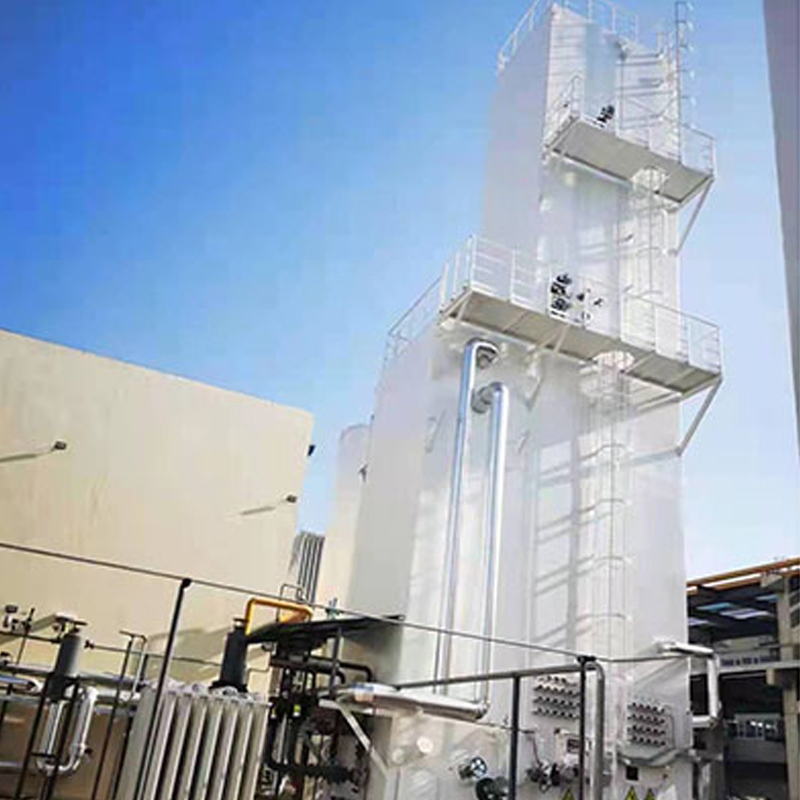
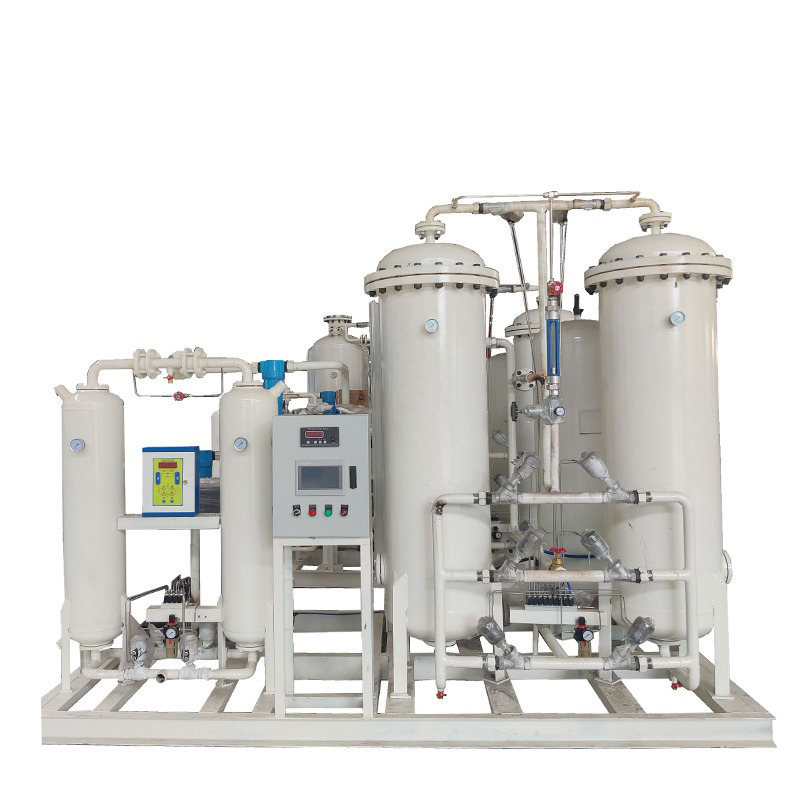
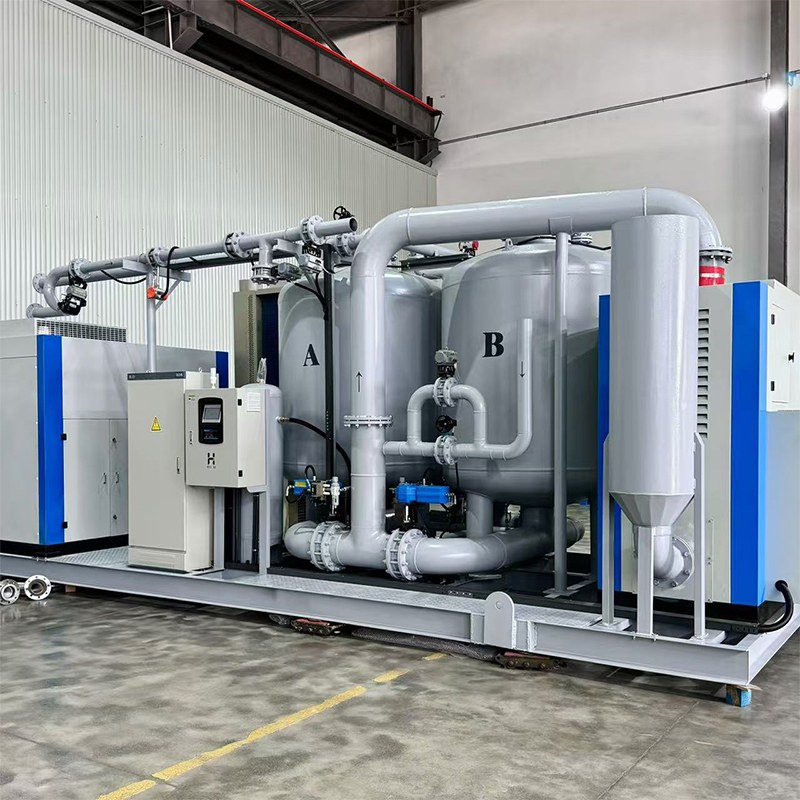
l Industrial Gas Plant
Nanjing Bangwin Gas focuses on:
l Customized compact LN2 solutions
l Energy-efficient designs
l Complete engineering support
l Professional commissioning
l Global technical service
For cryogenic storage solutions:
https://bangwingascylinder.com/
1. What is a small liquid nitrogen plant?
A small liquid nitrogen plant is a compact system that produces liquid nitrogen through cryogenic cooling technology.
2. What industries use small liquid nitrogen plants?
They are used in laboratories, healthcare, food processing, pharmaceuticals, electronics, and research.
3. Can a small LN2 plant operate independently?
Yes. It can operate independently or connect with existing nitrogen generation systems.
4. What is the production temperature of liquid nitrogen?
Liquid nitrogen exists at approximately -196°C under atmospheric pressure.
5. What affects small liquid nitrogen plant cost?
Capacity, purity, technology, automation level, storage size, and installation requirements affect cost.
6. Who supplies small liquid nitrogen plants?
Nanjing Bangwin Gas provides customized small liquid nitrogen plants and industrial gas solutions worldwide.
Small Liquid Nitrogen Plants offer a comprehensive solution to people who would like production of liquid nitrogen that can always be relied upon, and which they have complete flexibility over.
Advantages of small plants over larger systems include lower capital investment, compact design and easier installation.
Thus, they are mostly used in laboratories, research centers and small industrial uses.
Nanjing Bangwin Gas supplies small liquid nitrogen plants, nitrogen liquefaction system and other customized cryogenic solutions.
You can go to https://bangwingas.com/ to witness advanced liquid nitrogen production equipment.



 IPv6 rede suportada