-
WhatsApp / Mob : +86 156 5177 2521
-
o email : mrwin@cnbangwin.com
WhatsApp / Mob : +86 156 5177 2521
o email : mrwin@cnbangwin.com

categorias
último blog
Tag
Nitrogen Liquefaction Process: A Complete Guide to Industrial Liquid Nitrogen Production
Jul 03 , 2026
Liquid nitrogen is relied on every day across a variety of sectors. It is used extensively in food processors for quick freezing purposes. It is even used for cryogenic storage in several healthcare facilities. Until then, electronics manufacturers utilize for precise cooling. So, the Nitrogen Liquefaction Process analysis will help to choose a suitable production process by Rick Roth.
Today, liquefaction systems that utilize state-of the-art refrigeration technology paired with superb heat interchange. In addition, they continuously produce liquid nitrogen while reducing power consumption. But as demand from industry rises, more companies are installing on-site liquefaction systems. As a result, they achieve enhanced security of supply and reduced costs in operation over the long term.
Nitrogen Liquefaction Process – The high-purity nitrogen gas is liquefied into liquid nitrogen at temperatures around -196°C by means of compression, heat exchange, expansion refrigeration and deep cryogenic cooling.
Gaseous nitrogen is provided to many liquefaction plants from either a PSA Nitrogen Generator or Cryogenic Air Separation Plant. The gas is then cooled by the liquefaction system until it becomes a liquid.
Nitrogen liquefaction starts from purified nitrogen rather than atmospheric air as in air separation, As a result, the process is based on precooling your refrigeration rather than separation of gases.
l PSA Nitrogen Generator
l Cryogenic Air Separation Plant
There are a few practical benefits to liquid nitrogen.
It keeps more nitrogen in a lower volume, first.
Additionally, it offers quick cooling required for various industrial processes.
Also, it has long-term support for cryogenic storage.
Moreover, numerous sectors use liquid nitrogen as opposed to gaseous nitrogen.
With this in mind, on-site liquefaction not only lowers the transportation cost, but also enhances production flexibility.
This is why different manufacturers are also putting their money in nitrogen liquefaction technology.
The Nitrogen Liquefaction Process includes a multiple continuous stages.
It offices your coal gas onto the high purity nitrogen (N₂) that has been prematurely vaporized.
Many systems supply nitrogen from a PSA (pressure swing adsorption) plant or an air separation unit.
Thus, the liquefaction efficiency depends directly on gas purity.
Next, compressors increase nitrogen pressure.
Higher pressure improves cooling performance.
Also, compressors that are in great working condition save power consumption as well.
The compressed nitrogen proceeds into high-efficiency both heat exchangers.
Incoming nitrogen is cooled by the cold return gas.
Consequently, it recovers refrigeration energy from the system.
Consequently, power consumption decreases.
Some of the nitrogen goes into an expansion turbine or a Joule-Thomson expansion valve.
The pressure drops rapidly.
Thus, the temperature of the gas drops dramatically.
The refrigeration for liquefaction is produced in this stage.
The rest of the nitrogen passes through more heat exchangers.
Each stage reduces the temperature even further.
Then the gas finally reaches around -196 Celsius?
Liquid nitrogen, as its name implies, is frozen nitrogen at the liquefaction temperature.
Next, the nitrogen is moved by the plant into vacuum-insulated storage vessels.
This stage closes the Nitrogen Liquefaction Process
Every system contains several systems.
The compressor supplies pressurized nitrogen.
Therefore, it determines production capacity.
Heat: The heat exchanger in its fundamental purpose and principle works to transfer refrigeration energy from the cold source to the warmer environment - also keeping it very efficient.
Moreover, it improves system efficiency.
The turbine generates cryogenic refrigeration.
Thus nitrogen passes through its liquefaction temperature.
In some systems, a Joule-Thomson valve is used for the final expansion.
If it does not, this component performs supplemental cooling upstream of liquefaction.
The cryogenic equipment is contained in a cold box.
Furthermore, it minimizes heat leakage.
Liquid nitrogen is securely maintained in a storage tank.
High-quality insulation reduces evaporation losses.
l Cryogenic Air Separation Equipment
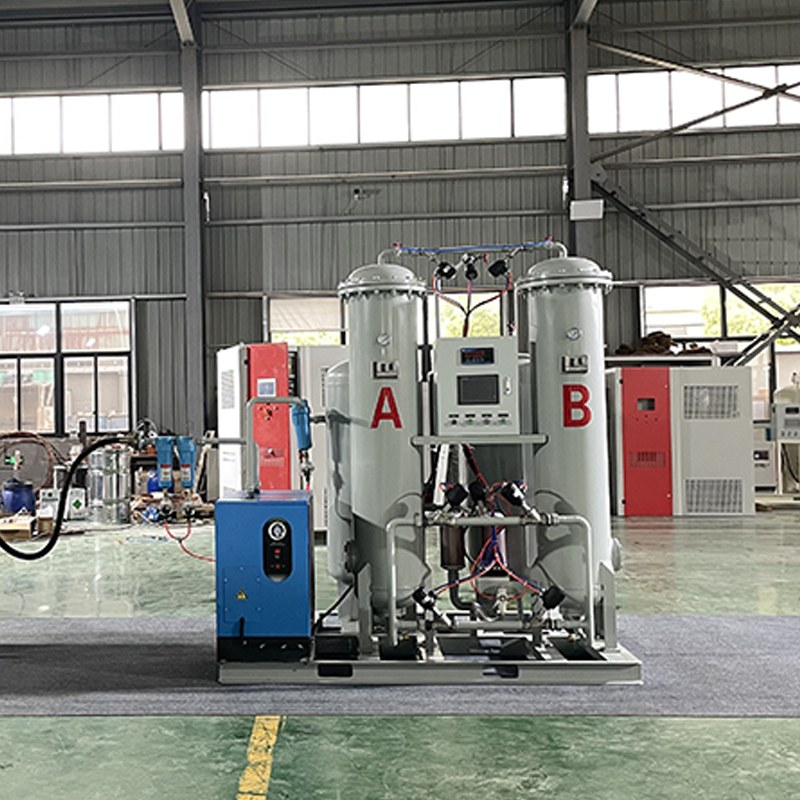
l LCO2 Storage Tank
l Liquid Oxygen Plant
Industrial liquefaction is enabled by the support of various refrigeration cycles.
Compression, heat exchange and Joule-Thomson Expansion cycles are used in the Linde-Hampson cycle.
This design is definitely the simplest operation type many small liquefaction systems choose this method.
The cycle is generic [16]: it combines an expansion turbine by Joule-Thomson expansion, which based on Claude etal.
Hence its efficiency is better than the Linde-Hampson cycle.
This the process used by most medium and large plants.
Other recent systems use blended refrigerants.
This design allows for further energy savings.
Consequently, operating costs decrease.
Several factors influence system performance.
Higher purity improves liquefaction efficiency.
Efficient compressors reduce electricity consumption.
Lower operating cost from better heat recovery.
Modern turbines generate more refrigeration.
CPU/Advanced PLC With the development of Internet technology, now combine with big data.
This is why in the long term, profitability depends greatly on the quality of your equipment.
Liquid nitrogen serves many industries.
Manufacturers freeze products rapidly.
Hospitals preserve biological materials.
Companies safely store vaccines and medicines.
Factories cool sensitive components.
Nitrogen for Inerting and blanketing parents.
Scientists carry out tests on materials by cooling them down.
l Industrial Gas Plant
l Nitrogen Plant Manufacturer
l Small Liquid Nitrogen Machine
|
Feature |
Nitrogen Liquefaction Process |
PSA Nitrogen Generator |
|
Product |
Liquid Nitrogen |
Gaseous Nitrogen |
|
Storage Density |
Very High |
Lower |
|
Nitrogen Purity |
High |
High |
|
Initial Investment |
Higher |
Lower |
|
Cryogenic Applications |
Excellent |
Not Suitable |
|
Transportation Savings |
Significant |
Moderate |
Several factors deserve careful consideration.
The first task is determining the demand for liquid nitrogen on daily basis.
Next, determine nitrogen purity requirements.
Moreover, evaluate available installation space.
Furthermore, compare energy consumption.
Lastly, select a manufacturer that has done cryogenic successfully for years.
Professional manufacturers also offer installation instructions, commissioning, and long-term technical support.
Shenzhen Bangwin Gas is engaged in industrial gas generation and cryogenic engineering applications.
Official Website:
https://bangwingas.com/
The company supplies:
l Cryogenic Air Separation Plant
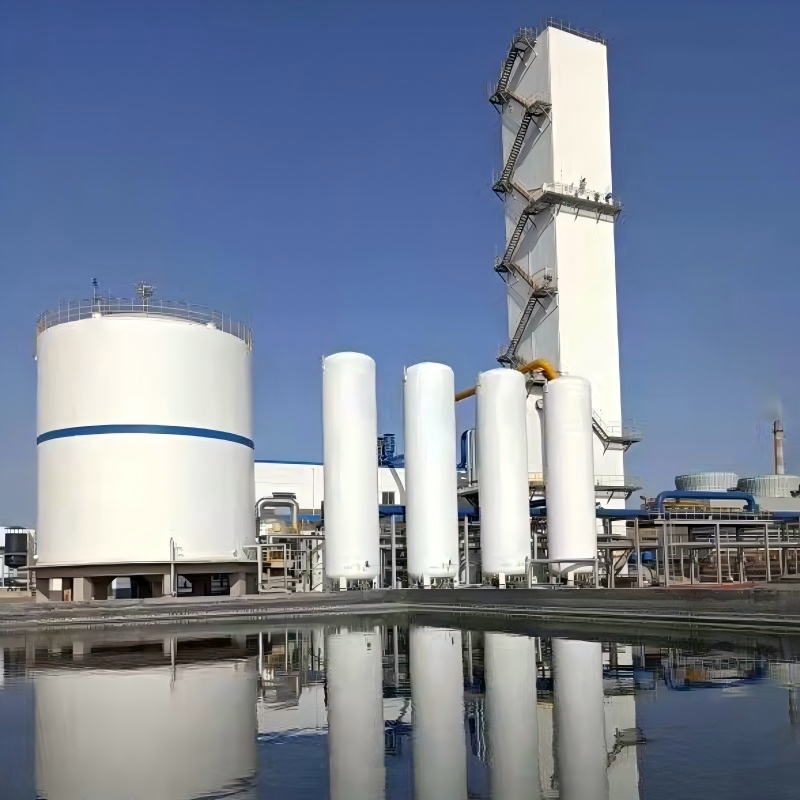
l Air Separation Unit
l PSA Nitrogen Generator
l PSA Oxygen Generator
l Cryogenic Air Separation Equipment
Nanjing Bangwin Gas provides:
l Customized engineering solutions
l Energy-efficient plant designs
l Turnkey project delivery
l Professional commissioning
l Global after-sales support
Therefore, customers get proven efficient and footprint-less liquid nitrogen production systems.
Cryogenic cylinders and storage tanks:
https://bangwingascylinder.com/
The nitrogen liquefaction process converts high-purity nitrogen gas into liquid nitrogen through compression, refrigeration, heat exchange, and expansion cooling.
Nitrogen liquefies at approximately -196°C under atmospheric pressure.
Yes. Many liquefaction systems use a PSA nitrogen generator as the nitrogen source.
The Claude cycle usually provides higher efficiency than the Linde-Hampson cycle.
Food processing, healthcare, pharmaceuticals, electronics, chemicals, and research institutions commonly use these systems.
Nanjing Bangwin Gas offers customized cryogenic equipment, advanced engineering, and comprehensive technical support for industrial gas projects.
The Nitrogen Liquefaction Process utilizes cryogenic refrigeration technology to pre-cool and liquefy high-purity nitrogen gas into liquid nitrogen.
Additionally, modern liquefaction systems offer stable production, superior energy efficiency and a long-term cost advantage. They are therefore still the go to answer for sectors demanding a continual source of liquid nitrogen.
Whether you require a Liquid Nitrogen Plant, Nitrogen Liquefaction Plant or an all-in-one cryogenic solution, Nanjing Bangwin Gas offers engineering that is tailored to your needs, reliable equipment and professional global support.
To learn more on high-end industrial gas generation solutions, visit bangwingas.com



 IPv6 rede suportada